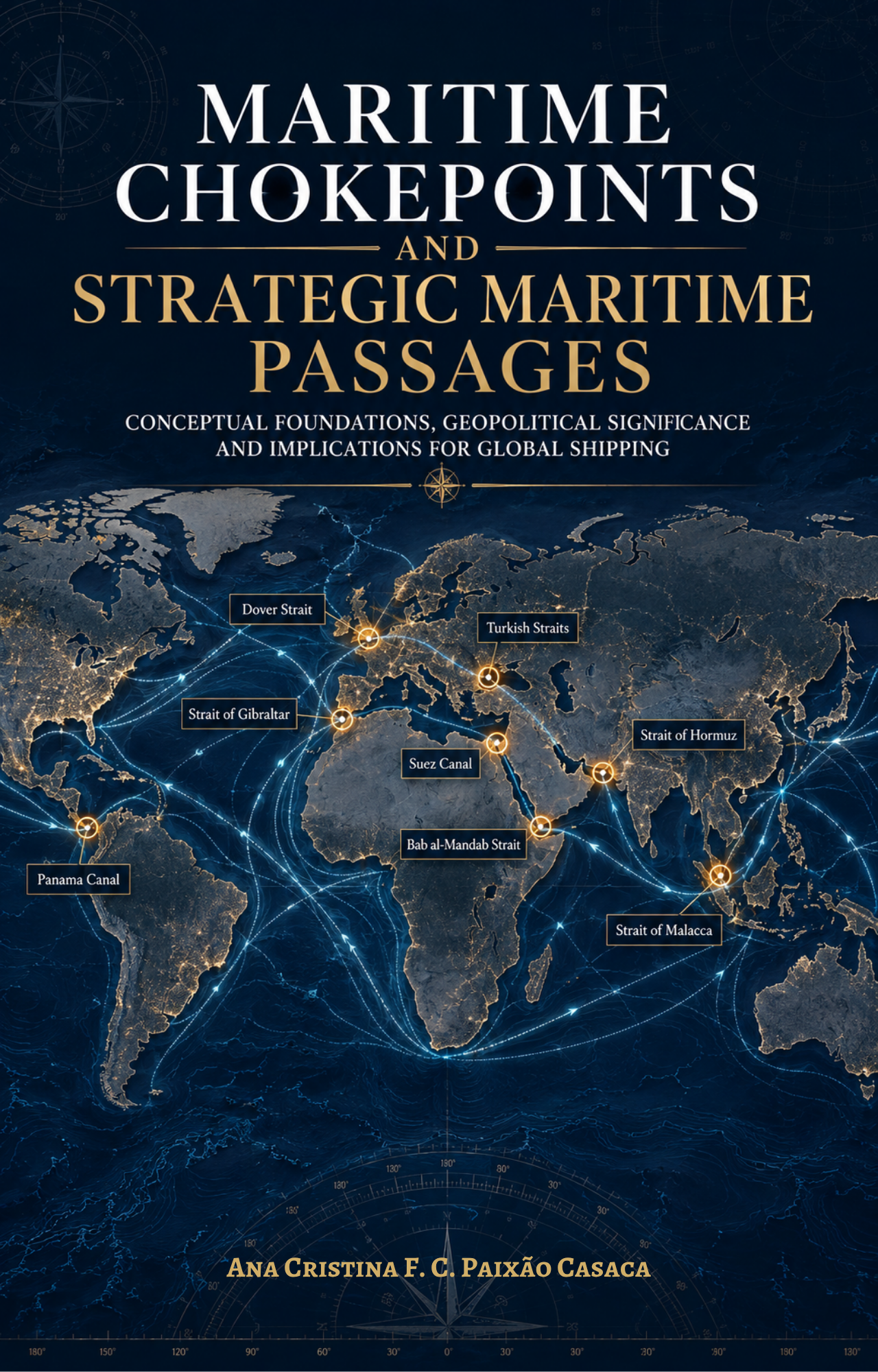
| MARITIME CHOKEPOINTS AND STRATEGIC MARITIME PASSAGES |
| |
| |
| Ana Cristina Ferreira Castela Paixão Casaca, World of Shipping Portugal, Parede, Portugal. |
 https://orcid.org/0000-0003-3925-473X https://orcid.org/0000-0003-3925-473X |
| |
| |
| |
| SUMMARY |
| Maritime chokepoints are critical components of the global transport system because they concentrate shipping movements within geographically restricted passages and connect major maritime regions. Their strategic importance extends beyond navigation: disruption may affect international trade, energy security, freight costs, supply-chain reliability and relations among states. However, the term maritime chokepoint is frequently applied without sufficient conceptual precision, leading narrow straits and artificial canals to be grouped with open-sea routes and other strategically important maritime locations. This work examines the historical and military origins of the chokepoint concept, distinguishes chokepoints from related geographical and geopolitical concepts, including shatterbelts, corridors, and gateways, and establishes the defining characteristics of a maritime chokepoint. Particular attention is given to the distinction between strict geographical and broader functional interpretations. On this basis, the work argues that the Cape of Good Hope, the Cape Horn, and Cape Leeuwin, although indispensable strategic passages and important alternatives, should not be classified as maritime chokepoints. Unlike a strait, channel or canal, they do not physically confine vessels between opposing shores or restrict navigation to a single passage. This conceptual distinction provides the foundation for a more consistent classification of primary and secondary maritime chokepoints and for the subsequent examination of their commercial, navigational and geopolitical significance. |
| |
| KEYWORDS |
| Maritime chokepoints; Strategic maritime passages; Maritime geopolitics; Transport corridors; Global shipping; Maritime trade; Supply chain resilience; Maritime security; Trade routes; Chokepoint vulnerability. |
| |
| |
| |
|
| |
| |
| |
ANNUAL SUBSCRIPTION |
| |
| Gain access to the WofSPortugal Knowledge Hub, a specialist digital library containing original texts on maritime transport, shipping, logistics and related fields. The content draws on my academic publications, research, teaching and extensive professional experience in the maritime sector. Subscribers will also have access to carefully selected links to complementary resources, including case studies, technical references, recommended readings, institutional publications and reliable sources of updated specialist information. |
| |
| Please note that the publication entitled Maritime Logistics. A New Curricular Unit and the Workshops are excluded from the WofSPortugal Knowledge Hub Annual Subscription and is subject to separate access conditions. |
| |
ANNUAL SUBSCRIPTION FEES |
| |
| Individual Student Subscription: €250 per year, plus VAT (Total Payable: €307.50). |
| Individual Professional Subscription: €600 per year, plus VAT (Total Payable: €738). |
| Company Subscription: €900 per user per year, plus VAT where applicable (Total Payable per User per Year: €1,107 VAT included). |
| University, Educational or Training Institutions: Quotation upon request, plus VAT where applicable. |
| Where VAT applies, Portuguese VAT will be charged at the current standard rate of 23%. Whether VAT is chargeable will depend on the subscriber’s tax status. |
| |
ACCESS AND USE |
| |
| All original materials are available exclusively for consultation through the WoSPortugal Knowledge Hub and cannot be downloaded, reproduced, printed, recorded, shared, distributed or republished without prior written authorisation. |
| Access credentials are personal and non-transferable. A subscription grants access to the WoSPortugal Knowledge Hub but does not transfer ownership or intellectual property rights to the subscriber. |
| Links to complementary external resources are provided for study and research purposes. Their content remains subject to the availability and terms established by the respective authors, publishers and organisations. |
| Each subscription is valid for 12 months from the date of activation. |
| |
SUBSCRIPTION ENQUIRIES |
| |
| Subscriptions will be available from January 2027. |
| To subscribe, please send an email to training@worldofshipping.org or fill in the form below, indicating the required subscription category. Students should prepare a valid proof of enrolment and deliver it upon request. Companies, universities and academic institutions should also specify the expected number and type of users so that an appropriate quotation can be prepared. |
| |
| |
| |
| COMPLETE YOUR SUBSCRIPTION |
| |
|
| |
| Top of the page |
| |