|
|
| |
| Maritime Navigation in Conflict Zones: From the Iran–Iraq War to the Contemporary Middle East Crisis |
| |
| Written by Ana Casaca |
Posted on 01 March 2026 |
Reading Time 27 minutes |
|
 |
| |
| Maritime navigation in conflict zones has changed fundamentally over the past four decades. What was once a question of managing risk within defined boundaries has become a challenge of navigating systemic uncertainty. Ships engaged in global trade routes to and from the Middle East, particularly those navigating towards the Persian Gulf, whether transiting the Suez Canal or alternative routes, operated under conditions of heightened risk and uncertainty during the Iran–Iraq War of 1980–1988. Such operating conditions extend beyond navigational challenges, inviting reflection not only on the profound human cost of instability, but also on the enduring question of when peace might prevail so that societies may coexist in greater harmony. At the same time, as a maritime educator, I am compelled to consider how successive crises reshape the conditions under which maritime navigation and global trade operate. |
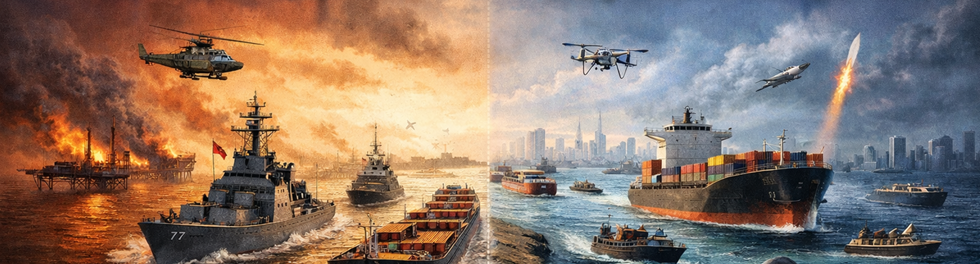
| A comparison between the Iran–Iraq War (1980–1988) and the current geopolitical environment in the Middle East, as of 1 March 2026, reveals not only a shift in the challenges affecting shipping but also in the operational, technological, and strategic frameworks underpinning navigation. While heightened exposure characterises both periods, the contemporary environment is notably more complex, less predictable, and more globally interconnected. This analysis, therefore, examines the evolution of maritime navigation from a relatively structured war environment to a more dynamic, multi-layered operating context. |
| |
1. Nature of the Conflict: From Conventional War to Hybrid Maritime Conflict |
| |
| During the Iran–Iraq War, maritime navigation was affected amid a declared interstate conflict between two identifiable belligerents. The so-called “Tanker War” phase (1984–1988) represented a strategic extension of land-based hostilities into the maritime domain, with both Iran and Iraq targeting oil exports in order to weaken each other economically. Despite the intensity of attacks, the conflict maintained a relatively structured character, with identifiable zones of risk and a clear understanding of the actors involved. Navigation risks, although severe, were largely associated with a defined war theatre. This structured nature of the conflict meant that, operationally, ship operators could rely on relatively stable intelligence, established reporting systems, and recognised high-risk areas. Although maritime navigation was affected by ongoing hostilities, the relative predictability of the environment enabled navigational decisions to be framed within established parameters. |
| In contrast, the contemporary situation in the Middle East is better described as a hybrid and multi-actor maritime security crisis. Rather than a single, declared war, the region is affected by overlapping tensions involving state and non-state actors, including Iran, United States, Israel, and Iran-aligned regional groups such as the Houthis in Yemen and Hezbollah in Lebanon, all of which contribute to an unstable and multifaceted security environment (Center for Preventive Action, 2026). These actors operate with varying objectives, capabilities, and rules of engagement, contributing to a more complex and evolving operating environment (Feierstein and Alasrar, 2024; UK Parliament, 2025; Romaniuk, 2026). For navigation, this represents a fundamental shift. Risk is no longer confined to a clearly delineated war zone but emerges from a fluid, evolving network of threats, often with limited warning and uncertain attribution. As a result, maritime operations must contend not only with physical hazards but also with uncertainty regarding the origin, intent, and escalation potential of any given incident. |
| |
2. Geographic Spread of Risk: Expansion of the Maritime Risk Geography |
| |
| A key distinction between the two periods lies in the geographical scope of navigational risk. During the Iran–Iraq War, maritime threats were largely concentrated within the Persian Gulf, particularly around oil terminals and shipping routes associated with Iranian and Iraqi exports. Although the risk level was high, it remained geographically contained, allowing shipping companies to adapt through routing strategies, timing adjustments, and coordination with naval forces. From an operational perspective, this risk concentration enabled vessels to limit their exposure by reducing time spent within high-risk zones and by following established transit corridors. The relatively confined nature of the threat environment also facilitated the implementation of protective measures, such as naval escorts and convoy systems, which helped maintain the continuity of maritime trade despite ongoing hostilities. |
| By contrast, the contemporary risk landscape extends well beyond the Persian Gulf, encompassing a series of interconnected maritime corridors, including the Strait of Hormuz, the Gulf of Oman, and the Red Sea–Bab el-Mandeb corridor (UK Parliament, 2025). This expansion significantly increases the complexity of voyage planning, as vessels must now assess risks across multiple strategic chokepoints rather than within a single, contained theatre. The implications of this broader risk geography are global in scope. These maritime corridors collectively handle a substantial share of the world’s energy flows and containerised trade, linking production centres in Asia and the Middle East with consumption markets in Europe and beyond. As a result, disruptions in any of these areas can trigger cascading effects across global supply chains, affecting freight rates, transit times, and overall market stability. |
| In this regard, the recent developments in the Middle East have led major container shipping lines to take precautionary measures in response to the evolving security situation, particularly affecting navigation through the Strait of Hormuz. Companies such as Maersk have suspended vessel transits through the Strait. At the same time, CMA CGM has instructed vessels in or bound for the Arabian Gulf to seek shelter and has temporarily halted Suez Canal passages, opting instead for rerouting via the Cape of Good Hope. These decisions, driven primarily by crew safety and cargo protection, are expected to result in delays, route deviations, and schedule adjustments. At the same time, carriers have introduced additional charges to reflect the increased operational risk, including emergency conflict surcharges and war risk surcharges, with significant cost implications across a wide range of Middle Eastern and Red Sea trades. Collectively, these measures illustrate how rapidly changing security conditions can directly affect navigation, routing decisions, and the economic dynamics of global shipping (Sand, 2026). |
| The current environment further illustrates the dynamic nature of this expanded risk landscape. Houthi forces are preparing to resume missile and drone attacks on maritime traffic in the Red Sea and Gulf of Aden in response to United States–Israeli actions against Iran, with operations potentially restarting imminently (Morgan, 2026). Such developments highlight the interconnection between regional geopolitical events and maritime security risks, reinforcing the notion that threats may emerge simultaneously across different parts of the maritime network. This anticipated resumption of attacks would bring to an end a roughly three-and-a-half-month period of relative calm, following a regional de-escalation linked to the November 2025 Gaza ceasefire (Morgan, 2026). The reactivation of hostilities in the Red Sea illustrates how rapidly the geographical distribution of risk can shift, requiring shipping companies to reassess route viability and operational exposure continuously. |
| At a navigational level, the expansion of maritime risk geography represents a fundamental transformation. Risk is no longer confined to a single high-threat zone but is distributed across a network of critical maritime corridors, each with its own risk profile and escalation dynamics. Consequently, voyage planning must adopt a system-wide perspective, integrating real-time intelligence, geopolitical developments, and commercial considerations. In this context, maritime navigation evolves from route optimisation within a defined risk area to the management of a complex and interconnected risk system, where disruptions in one region may have immediate and far-reaching consequences for global trade flows. |
| |
3. Type of Threats to Navigation: Evolution of Threat Types and Operational Risks |
| |
| The nature of threats to maritime navigation has evolved significantly between the Iran–Iraq War and the current crisis. During the 1980–1988 conflict, attacks on shipping were predominantly kinetic and observable, including air strikes, anti-ship missiles, and naval mines. Although these posed serious dangers, they were largely conventional in nature and could be mitigated through established naval and navigational practices, such as convoy systems, route adjustments, enhanced watchkeeping, and coordinated mine-clearance operations. Importantly, these threats were generally visible or detectable, allowing vessels to assess risk based on tangible indicators. As a result, while the operational environment was hazardous, it retained a degree of predictability. Shipmasters and operators could rely on intelligence reports, naval advisories, and observed patterns of activity to inform navigation decisions within a relatively structured threat environment. |
| In contrast, the contemporary maritime risk landscape is characterised by multi-dimensional and technologically advanced threats. In addition to conventional missile attacks and the continued risk of mines, vessels now face challenges from unmanned aerial vehicles, remote-controlled explosive boats, and swarm tactics involving fast-moving small craft. These asymmetric capabilities enable non-state actors to project force at relatively low cost while increasing the complexity of defensive measures. Furthermore, the emergence of electronic warfare introduces an additional and less visible layer of risk. Incidents of global positioning systems (GPS) jamming and spoofing undermine the reliability of satellite-based positioning systems; simultaneously, cyber threats may affect onboard navigation equipment, communication systems, port infrastructure, and wider logistics networks. These developments extend the scope of maritime risk beyond the physical domain into the digital sphere. |
| Consequently, navigation has evolved from a predominantly physical activity into a cyber-physical challenge. Bridge teams must not only manage traditional navigational hazards but also assess the integrity of electronic data and systems. This requires a combination of conventional seamanship, including radar, visual bearings, and manual plotting, alongside an advanced understanding of technological vulnerabilities and risk-mitigation strategies (Gard, 2026). From an operational perspective, the key transformation lies in reduced visibility and increased threat complexity. Whereas risks in the 1980s could often be observed and anticipated, modern threats may remain undetected until their effects materialise, thereby increasing uncertainty and placing greater emphasis on preparedness, redundancy, and real-time situational awareness. |
| |
4. Level of Disruption to Shipping |
| |
| A further critical distinction between the Iran–Iraq War and the current crisis lies in the level and nature of disruption to maritime shipping. During the 1980–1988 conflict, although the threat to vessels was significant, maritime trade continued. Ships operated under heightened risk, but navigational activity was sustained through adaptive measures, including convoy systems, naval escorts, and operational adjustments. Oil exports, which were the primary target of attacks, continued to flow, reflecting the strategic importance of maintaining energy supply even under hostile conditions. In this context, the maritime sector demonstrated a capacity to absorb and manage risk. The presence of structured military support, combined with relatively predictable threat patterns, allowed shipping companies to maintain operations, albeit at higher cost and with increased safety precautions. Navigation, therefore, remained viable, even within a high-risk environment. |
| In contrast, the situation as of March 2026 reflects a marked shift from risk management to risk avoidance. Rather than continuing operations under elevated threat levels, many shipping companies are suspending or significantly altering their operations. Vessels are delaying departures, anchoring outside high-risk areas, or reversing course after initiating transit. In some cases, ships that have already entered critical chokepoints have chosen to halt or divert, reflecting heightened uncertainty and concern over escalation. This shift is particularly evident in the Strait of Hormuz, where commercial traffic has been directly affected by rising geopolitical tensions. Major shipping companies have suspended transits through the Strait. |
| In contrast, others have halted routings through the Suez Canal and the Red Sea due to the combined risks posed by regional instability and potential Houthi attacks (Reuters, 2026a). According to recent reports, approximately 170 container ships, representing around 450,000 TEU, or roughly 1.4% of the global container fleet, have been affected by the disruption in the Strait of Hormuz (Shen, 2026). In addition, available data suggests that at least 15 container vessels have turned back while approaching or departing the Strait of Hormuz. While some ships have reversed course, a significant number have either remained at anchor or opted for alternative routes (Shen, 2026). |
| The implications of this level of disruption are substantial. Unlike the 1980s, when shipping continued despite challenging conditions, the current environment has led to partial disruption in key maritime corridors. The suspension of services, combined with rerouting and delays, affects global supply chains, influences freight rates, and introduces significant uncertainty into logistics planning. In practical terms, navigation is no longer simply a matter of managing operational risk but increasingly involves decisions about whether to operate at all. The combination of operational considerations, commercial pressures, and insurance constraints means that, in certain contexts, the most viable option may be to suspend navigation altogether. This transition from continuity under challenging conditions to partial operational disruption underscores the heightened sensitivity of modern maritime trade to complex, rapidly evolving geopolitical developments. |
| However, the consequences extend beyond the shipping industry itself. Economies that depend heavily on maritime transit routes are particularly affected. For example, Egypt, whose revenues are closely linked to traffic through the Suez Canal, is directly exposed to reductions in vessel transits. Diversions via alternative routes, such as the Cape of Good Hope, may therefore have broader economic implications, highlighting the interconnected nature of maritime navigation and national economic stability. |
| |
5. Status of the Strait of Hormuz |
| |
| The status of the Strait of Hormuz represents one of the most significant distinctions between the Iran–Iraq War and the current maritime security environment. During the 1980–1988 conflict, although the Strait was exposed to military activity and remained a high-risk area, it was never formally closed. All parties involved recognised its strategic importance as a global energy corridor, and despite attacks on shipping, the passage remained open. Navigation was therefore hazardous, but still feasible, and commercial traffic continued under conditions of elevated risk. |
| In contrast, the situation as of March 2026 is considerably more uncertain. The Strait of Hormuz can no longer be viewed solely as a critical maritime chokepoint. Under current conditions, it increasingly forms part of a broader “shattered belt” — a region characterised by overlapping tensions, multiple actors, and evolving dynamics. Within such an environment, the Strait is not simply a high-risk transit area, but a corridor where access may become constrained, disrupted, or temporarily unavailable, depending on the prevailing conditions. Recent developments further illustrate this shift. Reports indicate that vessels have received warnings advising against transiting the Strait, contributing to increased uncertainty regarding freedom of navigation. As a result, navigation is no longer defined solely by elevated risk, but also by the possibility of restricted or even temporarily denied access (Reuters, 2026b). |
| This shift has had an immediate operational impact. Shipping companies and national authorities have advised vessels to avoid the area, while many ships have chosen to delay transit, anchor in safer waters, or remain outside the Gulf altogether. Reports indicate that a significant number of tankers are currently anchored or holding position on either side of the Strait, awaiting clarity on the security situation (Arab News, 2026). At the same time, some operators have suspended all movements through the Strait, prioritising crew safety and asset protection (CMA-CGM, 2026; Hapag-Lloyd, 2026; Maersk, 2026). Major shipping companies have instructed their vessels to remain in safe waters, effectively halting transit until the situation stabilises (Saul, 2026; Reuters, 2026c). The reduction in traffic is therefore not solely the result of direct attacks, but of perceived risk and uncertainty. Even without a formally declared closure, the combination of military tension, ambiguous warnings, and the inability to guarantee safe passage has led to a significant decline in vessel movements. In some cases, shipping activity has been described as largely paused, with only limited outbound movements and few vessels entering the Strait (Lee et al., 2026). |
| From a strategic perspective, this represents a significant escalation in maritime risk. The Strait of Hormuz is one of the world’s most critical energy corridors, through which approximately 20 million barrels of oil per day are transported, equivalent to around 20% of global oil consumption and approximately 25–30% of seaborne oil trade (Dunn and Barden, 2025a). In addition, around 20–25% of global liquefied natural gas (LNG) flows pass through the Strait trade (Dunn and Barden, 2025b). A substantial volume of containerised cargo serving Gulf economies also depends on access through this corridor. Although container flows through the Strait are relatively limited on a global scale, accounting for approximately 2–3% of global container traffic, according to Container Trade Statistics, they remain critical for regional supply chains and market connectivity (Szakonyi, 2025). Any disruption to its operation, therefore, has immediate global implications, affecting energy markets, freight rates, and broader economic stability. |
| The current situation introduces the possibility of a de facto closure, even in the absence of a formal legal declaration. Although the Strait of Hormuz is recognised as an international strait under the United Nations Convention on the Law of the Sea (UNCLOS), which guarantees the right of transit passage, prevailing conditions may nonetheless constrain access in practice. Ships anchoring outside the Strait, delaying transit, or declining passage due to security considerations effectively reduce the corridor’s functional capacity. In this context, modern maritime disruption is less about formal closure and more about practical limitations on access. |
| This situation is considerably more difficult than that observed during the Iran–Iraq War, where, despite the risks, navigation continued. From a maritime perspective, the key transformation lies in the shift from a high-risk but open passage to a strategically uncertain chokepoint, where access itself is no longer guaranteed. The implications are significant, as operators must now consider not only the safety of transit, but also the possibility that transit may not be feasible at all, with direct consequences for voyage planning, risk assessment, and global trade flows. |
| |
6. Changes in Navigational Practices and Shipboard Procedures |
| |
| The operational conduct of navigation has undergone a significant transformation between the Iran–Iraq War and the contemporary maritime security environment. During the 1980s, ships transiting high-risk areas adopted a range of defensive navigation techniques to mitigate the risk of attack. These included sailing in convoys, maintaining strict radio discipline, reducing lighting during night-time transits, and adhering to prescribed routes coordinated with naval forces. Although such measures imposed operational constraints, they were relatively standardised and supported by structured naval escort systems. This provided procedural clarity, enabling shipmasters to follow established guidelines within a defined threat environment. Navigation, while hazardous, was governed by recognised protocols that reduced uncertainty and facilitated coordinated risk management. |
| Vessels may be instructed to delay entry into high-risk areas, alter course during transit, or divert entirely to alternative routes. This requires a high degree of flexibility and enhanced situational awareness from both shipboard personnel and shore-based management. In addition to physical threats, bridge teams must also manage technological vulnerabilities. The increasing incidence of GPS jamming and spoofing undermines the reliability of satellite-based navigation systems, necessitating the use of redundant methods, including radar, visual bearings, and manual position fixing. At the same time, crews must remain prepared for rapid response scenarios, including evasive manoeuvres, communication with naval forces, and emergency procedures in the event of an attack. |
| A notable development is the integration of best management practices, originally developed to counter piracy, into broader conflict-related navigation strategies. Measures such as enhanced watchkeeping, physical hardening of vessels, and the use of citadels are now applied in a wider security context, reflecting the convergence of different maritime threat paradigms. From an operational perspective, this evolution represents a shift from procedural navigation to adaptive risk management. Whereas navigation in the 1980s relied on established rules and coordinated protection, modern navigation requires continuous decision-making in a complex and uncertain environment. The role of the shipmaster has therefore expanded, encompassing not only navigational competence but also real-time risk assessment and crisis management capabilities. |
| |
7. The Role of Naval Forces: From Convoys to Complex Deterrence |
| |
| Naval forces continue to play a critical role in ensuring the safety and continuity of maritime navigation; however, their operational role has evolved significantly between the Iran–Iraq War and the current maritime security environment. During the 1980–1988 conflict, naval operations, particularly those conducted by the United States and its allies, centred on protecting merchant shipping through direct intervention. This included establishing convoy systems, reflagging operations, and providing armed escorts for vessels transiting high-risk areas. The command structure was relatively clear, and coordination between naval forces and commercial operators was well defined. These measures provided a degree of predictability and reassurance to the shipping industry. Although risks remained, the presence of organised naval protection enabled vessels to continue trading under controlled conditions. Navigation, therefore, operated within a framework of structured military support, with standardised procedures and clearly established communication channels. |
| In the contemporary context, the maritime domain is characterised by the simultaneous presence of multiple naval forces operating across the region. These include the navies of the United States, European states, and regional actors, each with distinct mandates, operational priorities, and rules of engagement. While their broader objective is to maintain security and freedom of navigation, the absence of a unified command structure increases operational complexity. For merchant vessels, this fragmented security environment can create uncertainty. Differences in communication protocols, identification procedures, and response mechanisms increase the risk of misinterpretation or misidentification, particularly in congested or contested waters. In a context where both state and non-state actors operate with varying degrees of transparency, the potential for unintended escalation is significantly heightened. |
| As a result, the role of naval forces has shifted from direct escort and protection towards a more complex model based on deterrence, surveillance, and rapid response. Naval units now focus on monitoring maritime activity, providing intelligence and advisories, and responding to incidents as they arise, rather than accompanying vessels throughout their transit. While this approach remains essential for maintaining regional stability, it does not necessarily offer the same level of operational certainty to commercial operators as the convoy systems of the past. Shipmasters must therefore navigate an environment in which naval presence is significant, but support is less direct and more conditional. At a strategic level, this transformation reflects a broader shift from structured protection to distributed security. Clearly defined escort mechanisms no longer support navigation, but rather rely on a more diffuse system of deterrence and situational awareness, requiring greater autonomy and decision-making responsibility on the part of both shipboard and shore-based operators. |
| The coexistence of multiple naval forces also increases the complexity of communication and coordination at sea. Differences in procedures, identification protocols, and rules of engagement may create ambiguity for merchant vessels operating in contested waters. This environment heightens the risk of misinterpretation and unintended escalation, particularly in situations involving rapid response or limited situational awareness. Consequently, the presence of naval forces, while essential for deterrence, may also contribute to operational uncertainty for commercial navigation. |
| |
8. Insurance, Commercial Decisions, and Market Response |
| |
| The commercial dimension of maritime navigation has become increasingly significant in shaping operational decision-making. During the Iran–Iraq War, although war-risk insurance premiums increased in response to heightened threats, shipping operations generally continued. This continuity was supported by state-backed insurance schemes and the strategic imperative to maintain global energy flows. As a result, the willingness of shipowners and charterers to accept operational risk remained relatively high, and navigation continued despite the danger. In this context, risk was largely incorporated into the economic framework of maritime trade. Higher insurance costs were offset by freight rates and strategic necessity, enabling vessels to continue operating within defined high-risk areas. Navigation decisions were therefore primarily operational, supported by financial mechanisms designed to absorb elevated levels of risk. |
| In the contemporary environment, however, the relationship between risk and commercial decision-making has undergone a significant transformation. Shipping companies now adopt a more risk-averse approach, reflecting both the complexity of the threat environment and the evolving structure of global maritime markets. War-risk premiums have increased sharply, in some cases rising by up to 50% (Harris et al., 2026), while insurers may impose additional conditions, restrict coverage, or withdraw it altogether for certain regions. This shift has direct implications for navigation. Charterers and shipowners must balance operational feasibility against financial exposure, insurance availability, and legal compliance. Even where navigation is technically possible, the absence of adequate insurance coverage or the presence of prohibitive premiums may render a voyage commercially unviable. As a result, vessels may be rerouted, delayed, or entirely withdrawn from high-risk areas. |
| The consequences extend beyond individual voyages. Rerouting decisions, such as diverting vessels around the Cape of Good Hope, lead to longer transit times, increased fuel consumption, and reduced fleet availability. These factors contribute to rising freight rates and disruptions across global supply chains, particularly in energy and containerised trade. Navigation decisions are therefore no longer determined solely by technical and safety considerations. Instead, they are shaped by a complex interplay of operational risk, insurance constraints, contractual obligations, and broader strategic considerations. In practical terms, this reflects a shift from risk absorption to risk avoidance, in which commercial and legal factors play a decisive role in determining whether navigation can take place at all. |
| In this context, insurance has evolved from a supporting mechanism into a determining factor in navigation decisions. A vessel may be technically capable of transiting a high-risk area, yet unable to do so due to the absence of adequate insurance cover or the presence of restrictive clauses imposed by underwriters. Charter party obligations, sanctions compliance, and liability exposure further complicate decision-making. As a result, navigation is no longer governed solely by operational feasibility, but by the interaction between legal, financial, and contractual constraints, reinforcing a broader shift towards risk avoidance. |
| |
9. Technological Advancements: Opportunities and Vulnerabilities |
| |
| Technological progress has fundamentally transformed maritime navigation since the Iran–Iraq War, enhancing both operational efficiency and situational awareness. Modern vessels are equipped with advanced systems such as GPS, automatic identification systems (AIS), electronic chart display and information systems (ECDIS), and satellite-based communication platforms. These technologies enable precise positioning, real-time monitoring of vessel movements, and improved coordination between ships and shore-based authorities. Under normal operating conditions, such systems significantly enhance navigational safety and support more efficient voyage planning. In contrast, navigation during the 1980s relied primarily on radar, visual observation, celestial navigation, and manual plotting techniques. While less sophisticated, these methods were inherently resilient, as they were not dependent on external signals and were therefore largely immune to electronic interference. Navigational risk was therefore predominantly physical rather than technological. |
| In the contemporary environment, however, increased technological dependence introduces new vulnerabilities. Electronic navigation systems can be disrupted through jamming or spoofing, undermining the accuracy and reliability of positional data. Such interference may lead to navigational errors, particularly in confined or congested waters, where precise positioning is critical. At the same time, the digitalisation of maritime operations exposes vessels and associated infrastructure to cyber threats, which may affect onboard systems, communication networks, and port operations. These developments create a dual-edged dynamic in modern navigation. While technology enhances capability, it also expands the range of potential risks. In this context, bridge teams must maintain the ability to revert to traditional navigation techniques, including radar plotting, visual bearings, and manual position fixing, in order to verify or replace compromised electronic data. |
| The coexistence of advanced digital systems and traditional seamanship underscores the importance of redundancy, training, and operational resilience. Modern navigation is therefore not solely dependent on technological proficiency, but also on the ability to critically assess system reliability and respond effectively to system degradation or failure. For maritime operators, the key transformation lies in shifting from technological enhancement to technological dependency, where new, potentially disruptive vulnerabilities accompany the benefits of advanced systems. Ensuring safe navigation in such an environment requires an integrated approach that combines technological competence with fundamental navigational skills. |
| |
10. Strategic Implications for Global Trade |
| |
| The implications of maritime navigational risk extend far beyond the operational sphere of shipping, directly influencing global economic stability and geopolitical dynamics. The Middle East remains a critical hub for global energy supplies, with key maritime chokepoints, particularly the Strait of Hormuz, serving as essential conduits for oil and LNG flows. Disruptions in these corridors can therefore have immediate and far-reaching consequences for international energy markets and supply chains. During the Iran–Iraq War, despite significant threats to shipping, the global economy demonstrated resilience. While oil prices were affected and operational risks increased, maritime trade continued, supported by strategic imperatives and adaptive measures within the shipping industry. The global economy, although impacted, was less interconnected and less dependent on tightly synchronised supply chains than it is today. In contrast, the contemporary global economy is characterised by high interconnectivity, just-in-time logistics, and reliance on continuous maritime flows. As a result, disruptions in key shipping routes have amplified effects, extending beyond regional trade to influence global production networks, inventory systems, and commodity markets. Delays or rerouting of vessels can quickly lead to supply shortages, higher transportation costs, and volatility in freight and energy prices. |
| The potential closure or severe restriction of a major chokepoint, such as the Strait of Hormuz, therefore, represents a scenario of significant systemic risk. Even without a formal closure, reduced traffic flows, heightened uncertainty, and increased operational costs can disrupt the balance of global trade. The cascading effects may impact not only energy markets, but also containerised trade, manufacturing supply chains, and broader economic activity. In this context, maritime navigation assumes a strategic dimension that extends beyond the safe passage of individual vessels. It becomes a critical component of global economic resilience and geopolitical stability. Ensuring the continuity of navigation through key maritime corridors is therefore not only a matter of operational safety, but also of strategic importance for the functioning of the global economy. |
| More broadly, the evolution of maritime risk in the Middle East underscores the growing interdependence among security, trade, and navigation. As global supply chains become more complex and more susceptible to disruption, the stability of maritime routes becomes a central factor in maintaining economic equilibrium and managing geopolitical risk. |
| |
11. From Predictable Danger to Systemic Uncertainty |
| |
| The most fundamental distinction between the Iran–Iraq War and the contemporary maritime security environment lies in the nature of uncertainty. During the 1980–1988 conflict, navigation was undoubtedly dangerous, but the risks were relatively predictable and geographically bounded. Threats were concentrated within defined areas, primarily in the Persian Gulf, and were associated with identifiable actors operating within a structured conflict framework. This relative predictability allowed shipping companies to develop adaptive strategies, including convoy participation, routing adjustments, and coordination with naval forces. Although risk exposure was unavoidable, navigation continued under conditions that, while hazardous, were sufficiently understood to enable informed operational decision-making. Risk, in this context, was both visible and manageable within established parameters. In contrast, the contemporary maritime environment is characterised by systemic uncertainty. The absence of a single, clearly defined conflict, combined with the multiplicity of actors and the diversity of threat types, creates a complex and fluid risk landscape. State and non-state actors operate simultaneously, often with differing objectives and levels of transparency, while threats range from conventional kinetic attacks to cyber and electronic disruptions. |
| This complexity significantly reduces the predictability of maritime risk. Incidents may occur without warning, and their origin or intent may not be immediately clear, complicating both response and escalation management. Moreover, the geographic expansion of risk across multiple interconnected maritime corridors amplifies the potential for disruption, as events in one region may rapidly affect operations elsewhere. As a result, navigation is no longer limited to avoiding known hazards but requires anticipating emerging, often intangible threats. Decision-making must incorporate real-time intelligence, probabilistic risk assessment, and scenario-based planning, reflecting the dynamic nature of the operational environment. The roles of both shipmasters and shore-based management have therefore evolved, requiring continuous evaluation of risk conditions and a readiness to respond to rapidly changing circumstances. |
| For maritime operators, this represents a shift from predictable danger to systemic uncertainty. Whereas the earlier conflict allowed for adaptation within a known risk framework, the current environment demands resilience in the face of ambiguity. Navigation is no longer simply a matter of traversing a hazardous area, but of operating within a complex system where risks are interconnected, evolving, and often difficult to quantify. This transformation has profound implications for maritime operations, risk management, and global trade. It underscores the need for flexible strategies, enhanced situational awareness, and integrated security approaches that reflect the increasingly uncertain nature of the modern maritime domain. |
| |
12. Speed of Escalation and Operational Volatility |
| |
| A further key distinction between the Iran–Iraq War and the contemporary maritime environment lies in the speed at which risk conditions can evolve. During the 1980–1988 conflict, escalation occurred gradually over an extended period. Changes in the threat environment were relatively predictable, allowing shipping companies and shipmasters to adjust routes, procedures, and operational strategies over time. Although risks were significant, the pace of change provided some stability for planning and decision-making. In contrast, the current maritime security environment is highly dynamic, with escalation capable of occurring within hours or days. Individual geopolitical or military events, such as targeted strikes or retaliatory actions, may trigger immediate disruptions to shipping operations. In response, carriers may suspend services, reroute vessels, or delay departures with little notice, reflecting the need for rapid adaptation. |
| This acceleration of risk dynamics creates a volatile operating environment, significantly reducing traditional planning horizons. Voyage planning is no longer a static process; it now requires continuous reassessment based on real-time intelligence and evolving threat conditions. Decisions that would previously have been taken over days or weeks may now need to be made within hours. This shift has important implications for the distribution of decision-making authority between shipboard and shore-based management. Whereas shipmasters in the 1980s operated with a relatively high degree of autonomy within established procedures, contemporary navigation increasingly depends on shore-based monitoring, intelligence analysis, and centralised decision-making. Shipping companies maintain constant communication with vessels, providing updated guidance and, in some cases, directing operational decisions in real time. This reflects a transition towards integrated risk management systems, where navigation is coordinated across organisational levels rather than determined solely on board. |
| In operational terms, this shift towards rapid escalation increases uncertainty and places greater demands on both shipboard and shore-based management. It reinforces the need for flexible strategies, robust communication systems, and the capacity to respond quickly to changing circumstances. Ultimately, the speed of escalation contributes to the broader transformation of maritime risk, from a relatively stable threat environment to one characterised by volatility and unpredictability. At a broader level, the acceleration of risk dynamics also amplifies the systemic impact of maritime disruption. Rapid changes in security conditions can trigger immediate reactions across global shipping networks, including route suspensions, congestion in alternative corridors, and volatility in freight and energy markets. The reduced ability to anticipate and absorb shocks increases the vulnerability of global supply chains, reinforcing the strategic importance of resilience and adaptability in maritime transport systems. |
| |
13. Overall Difference and Conclusion |
| The comparison between the Iran–Iraq War and the contemporary Middle Eastern crisis highlights a fundamental transformation in maritime security and navigation. The earlier conflict represented a structured war with clearly defined risk zones, allowing maritime operations to continue despite elevated danger. Risk was geographically concentrated, understood, and managed within established operational frameworks. Although the environment was hazardous, it remained sufficiently predictable to enable adaptive strategies, including convoy operations, routing adjustments, and coordinated naval support. By contrast, the current situation reflects an unstructured, multi-front crisis characterised by a broader geographic scope and a more complex threat environment. Risks are less predictable and more interconnected, affecting multiple maritime corridors simultaneously. The involvement of both state and non-state actors, combined with the emergence of hybrid threats, creates a fluid, evolving risk landscape that challenges traditional navigation approaches. |
| The most significant transformation lies in the uncertainty nature. Whereas the earlier conflict presented a known and manageable risk, the contemporary environment is defined by systemic uncertainty, in which both threats and their consequences are more difficult to anticipate. This uncertainty is reinforced by the speed of escalation, technological vulnerabilities, and the increasing interdependence of global trade systems. As a result, maritime navigation is no longer confined to the management of identifiable hazards but requires continuous assessment of a complex and dynamic risk environment. This transformation extends beyond the operational conduct of navigation. Real-time intelligence, insurance constraints, legal considerations, and geopolitical developments increasingly shape modern maritime decision-making. Navigation has therefore evolved from a primarily technical function into a multi-dimensional process involving both shipboard and shore-based actors, requiring the integration of operational, technological, commercial, and strategic perspectives. |
| For maritime professionals, this shift necessitates a redefinition of navigational competence. Traditional seamanship remains essential, but it is no longer sufficient on its own. Effective navigation in conflict-affected regions requires an integrated understanding of security dynamics, technological systems, and commercial constraints, as well as the capacity to respond rapidly to changing conditions. From a broader perspective, maritime navigation has become a strategic function at the heart of global trade resilience. The ability to maintain safe and efficient maritime flows amid uncertainty is increasingly critical to the stability of global supply chains and the wider international economy. The evolution of maritime risk in the Middle East, therefore, reflects not only changes in the conflict nature but also the growing interdependence between security, trade, and navigation. |
| Ultimately, the shift from predictable danger to systemic uncertainty represents the defining characteristic of contemporary maritime operations. Navigation is no longer simply a matter of safely transiting a defined danger zone, but of operating within a complex and interconnected system where risks are evolving, interdependent, and often difficult to quantify. In this context, adaptability, resilience, and strategic awareness emerge as essential capabilities for modern maritime navigation. |
| |
References |
| |
| Arab News (2026). CMA CGM, global carriers suspend Gulf transits on security fears. Arab News, 1 March 2026. Retrieved from https://www.arabnews.com/node/2634889/business-economy [accessed 1 March 2026]. |
| Center for Preventive Action (2026). Conflict in Yemen and the Red Sea. Global Conflict Tracker, 28 February 2026. Retrieved from https://www.cfr.org/global-conflict-tracker/conflict/war-yemen [accessed 1 March 2026]. |
| CMA-CGM (2026). Advisory #1 - Middle East – Strait of Hormuz and Bab El Mandeb Security Transits. CMA-CGM, 28 February 2026. Retrieved from https://www.cma-cgm.com/news/5339/advisory-1-middle-east-strait-of-hormuz-and-bab-el-mandeb-security-transits [accessed 1 March 2026]. |
| Dunn, C. and Barden, J. (2025a). Amid regional conflict, the Strait of Hormuz remains critical oil chokepoint. U.S. Energy Information Administration, 16 June 2025. Retrieved from https://www.eia.gov/todayinenergy/detail.php?id=65504 [accessed 1 March 2026]. |
| Dunn, C. and Barden, J. (2025b). About one-fifth of global liquefied natural gas trade flows through the Strait of Hormuz. U.S. Energy Information Administration, 24 June 2025. Retrieved from https://www.eia.gov/todayinenergy/detail.php?id=65584 [accessed 1 March 2026]. |
| Feierstein, G. M. and Alasrar, F. A. (2024). The geopolitical implications of Houthi attacks and Israeli retaliation. Middle East Institute, 23 July 2024. Retrieved from https://mei.edu/publication/geopolitical-implications-houthi-attacks-and-israeli-retaliation/ [accessed 1 March 2026]. |
| Gard (2026). Escalating Israel–Iran conflict threatens Gulf shipping. Gard, 28 February 2026. Retrieved from https://gard.no/en/insights/escalating-israel-iran-conflict-threatens-gulf-shipping/ [accessed 1 March 2026]. |
| Hapag-Lloyd (2026). Suspension of Strait of Hormuz Transits Due to Security Closure. Hapag-Lloyd, 28 February 2026. Retrieved from https://www.hapag-lloyd.com/en/services-information/news/2026/02/suspension-of-strait-of-hormuz-transits-due-to-security-closure.html [accessed 1 March 2026]. |
| Harris, L., John, J. and Moore, M. (2026). Insurers to cancel policies and raise prices for ships in Gulf and Strait of Hormuz. Financial Times, 28 February 2026. Retrieved from https://www.ft.com/content/2dc114d0-5bb3-4fae-b538-9a050954549a [accessed 1 March 2026]. |
| Lee, J., Soon, W. and Longley, A. (2026). Ships avid Hormuz as Iran Raises Threats, Conflict Spreads. Bloomberg, 28 February 2026. Retrieved from https://www.bloomberg.com/news/articles/2026-02-28/oil-tankers-avoiding-vital-hormuz-strait-after-us-bombs-iran [accessed 1 March 2026]. |
| Maersk (2026). Rerouting of ME11 and MECL Service around The Cape of Good Hope. Maersk, 1 March 2026. Retrieved from https://www.maersk.com/news/articles/2026/03/01/me11-mecl-rerouting-cape-of-good-hope-march [accessed 1 March 2026]. |
| Morgan, P. (2026). Houthis Signal Renewed Red Sea Shipping Attacks After U.S.–Israeli Strikes on Iran. gCaptain, 28 February 2026. Retrieved from https://gcaptain.com/houthis-signal-renewed-red-sea-shipping-attacks-after-u-s-israeli-strikes-on-iran/ [accessed 1 March 2026]. |
| Reuters (2026a). Oil and gas majors and traders suspend shipments via Hormuz, sources say. Reuters, 28 February 2026. Retrieved from https://www.reuters.com/business/energy/oil-gas-majors-traders-suspend-shipments-via-hormuz-us-attacks-iran-sources-say-2026-02-28/ [accessed 1 March 2026]. |
| Reuters (2026b). Iran's revolutionary guards tell ships passage through Strait of Hormuz 'not allowed', EU naval mission official says. Reuters, 28 February 2026. Retrieved from https://www.reuters.com/world/middle-east/irans-revolutionary-guards-tell-ships-passage-through-strait-hormuz-not-allowed-2026-02-28/ [accessed 1 March 2026]. |
| Reuters (2026c). Japan shippers halt Hormuz operations after US, Israel strikes on Iran. Reuters, 1 March 2026. Retrieved from https://www.reuters.com/world/asia-pacific/japan-shippers-halt-hormuz-operations-after-us-israel-strikes-iran-2026-03-01/ [accessed 1 March 2026]. |
| Romaniuk, S. N. (2026). The Houthis And Maritime Vulnerability: Implications For 2026 – Analysis. Eurasia Review, 5 January 2026. Retrieved from https://www.eurasiareview.com/05012026-the-houthis-and-maritime-vulnerability-implications-for-2026-analysis/ [accessed 1 March 2026]. |
| Sand, P. (2026). A sailing through the Strait of Hormuz. LinkedIn, 1 March 2026. Retrieved from https://www.linkedin.com/feed/update/urn:li:activity:7433919079339618304/ [accessed 1 March 2026]. |
| Saul, J. (2026). Hundreds of ships drop anchor in Middle East Gulf, data shows, Reuters, 1 March 2026. Retrieved from https://www.reuters.com/business/energy/hundreds-ships-drop-anchor-middle-east-gulf-us-war-iran-escalates-data-shows-2026-03-01/ [accessed 1 March 2026]. |
| Shen, C. (2026). Iran attacks prompt Red Sea rethink as box shipping exits Strait of Hormuz. Lloyd’s List, 1 March 2026. Retrieved from https://www.lloydslist.com/LL1156478/Iran-attacks-prompt-Red-Sea-rethink-as-box-shipping-exits-Strait-of-Hormuz [accessed 1 March 2026]. |
| Szakonyi, M. (2025). Closure of Strait of Hormuz would further stretch global container capacity. Journal of Commerce, 16 June, 2025. Retrieved from https://www.joc.com/article/closure-of-strait-of-hormuz-would-further-stretch-global-container-capacity-6025484 [accessed 1 March 2026]. |
| UK Parliament (2025). UK and international response to Houthis in the Red Sea 2024/25. Commons Library Research Briefing, 4 February 2025. UK Parliament. Retrieved from https://commonslibrary.parliament.uk/research-briefings/cbp-9930/ [accessed 1 March 2026]. |
| |
About the Author |
| Ana Casaca was, first and foremost, a Deck Officer responsible for navigational watches. Being at sea gave her a thorough perspective of the operational side of the shipping industry. She holds a B.Sc. (Honours) in Management and Maritime Technologies from Escola Nautica Infante D. Henrique (Portuguese Nautical school), an MSc in International Logistics from the University of Plymouth and a PhD in International Transport/Logistics from the University of Wales-Cardiff. Next, she became an Experienced Lecturer, Researcher and Peer Reviewer in Maritime Economics and Logistics. In between, numerous functions and roles. For 20 years, she has been an External Expert for the European Commission, evaluating R&D/CEF proposals within the scope of maritime transport. In parallel, she has carried out other projects. She has delivered training and has been invited, since 2002, to peer review academic papers submitted to well-known international Journals. She is the author of several research papers published in well-known academic journals and member of some journals’ editorial boards, namely, Maritime Business Review Associate Editor, Journal of International Logistics Editorial Board Member, Universal Journal of Management Editorial Board Member, Frontiers in Future Transportation Review Editor, and Journal of Shipping and Trade Guest Editor. She is also the founder and owner of ‘World of Shipping Portugal’ a website initiative established in 2018 focused on maritime economics. In addition, she is a Member of the Research Centre on Modelling and Optimisation of Multifunctional Systems (CIMOSM, ISEL), Fellow of the Institute of Chartered Shipbrokers (ICS) and Member of the International Association of Maritime Economists (IAME). Beyond my professional achievements, she is deeply committed to holistic well-being and creative expression. She is an avid practitioner of Yoga, Pilates, and Tai Chi/Chi Kung, and a passionate traveller with a keen appreciation for the arts. Her interests extend to sewing and the sensory world of scents, which she explores by creating crafted cosmetics. This passion for creativity and mindful living led her to found Earth & Soul, a project devoted to wellness, artistic expression, and soul-nourishing content to pursue a meaningful and balanced life. All these elements bring her on the quest for creativity, always with the expectation of doing something extraordinary! |
| |
| This work was written from the core and refined with intellect. It stands as a contribution of lived experience, conscious thought, and unwavering clarity. |
| |
|
| |
| Top of the page |
| |
|
|